英语
英语 西班牙语
西班牙语 法语
法语 阿拉伯语
阿拉伯语 意大利语
意大利语A 60 space retail lot with a transformer 400 feet from the closest pole rarely fails on lighting performance. It fails on the electrical quote. When trenching, conduit, panel work and inspection cost more than the fixtures themselves, owners start treating commercial solar LED parking lot lights as a budget decision rather than a green one.
The short answer comes first: solar wins when grid power is far away or slow to arrange, when the panel plane receives three to four hours of winter sun, and when pole, panel and battery are specified as one system. It loses under dense canopy, under heavy snow or dust, and wherever a tenant demands guaranteed full output every night. Morelux, a Ningbo pole manufacturer founded in 1998 with more than 200 staff and exports to over thirty countries, produces aluminium and steel poles together with solar pole assemblies, which helps keep the structure and the power side inside a single specification.
Contenido
- 1 When Solar Makes Sense for a Parking Lot
- 2 What Commercial Solar LED Area Lights Actually Deliver
- 3 How the Pole, Panel and Battery Work Together
- 4 Choosing the Pole: Height, Material and Mounting
- 5 Solar and Grid Tied Side by Side
- 6 Where Solar Pays Back Fastest
- 7 Procurement Checklist Before You Order
- 8 Next Step
When Solar Makes Sense for a Parking Lot
Treat a solar lot light as two systems sharing one foundation: a pole that must carry wind load for decades, and an electrical package that must survive the worst week of December. Neither problem can be solved later by adding panel wattage.
Conditions that favour solar
- Distance to an existing power source is longer than about 150 feet, or the run crosses asphalt, rail lines or mature trees.
- Utility coordination, metering and inspection would add weeks to the schedule.
- Security level lighting is enough, so 5,000 to 8,000 lumens per pole meets the target.
- Worst month sun hours stay above three hours on the panel plane.
Conditions that point back to grid power
- Canopy or tall buildings shade the panel for more than two hours around midday.
- Snow, dust or salt spray builds up and nobody can clean the modules.
- The tenant wants guaranteed full output every single night of the year.
The familiar compromise is a mixed layout, with grid power near the entrance and solar poles deeper into the lot where the trench would be longest.
What Commercial Solar LED Area Lights Actually Deliver
Most commercial solar area lights use 40 W to 80 W LED arrays that produce about 5,000 to 12,000 lumens at the fixture. That sits below a 150 W grid tied area light, and the gap is deliberate: fewer lumens drawn from a battery means smaller panels, a lighter enclosure and a shorter payback. The workaround is more poles at lower output rather than fewer poles at high output.
| Specification | Solar LED area light | Grid tied LED area light |
|---|---|---|
| Fixture output | 5,000 to 12,000 lumens | 10,000 to 30,000 lumens |
| LED load | 40 W to 80 W | 70 W to 150 W |
| Power source | Panel and battery on the pole | Utility feed with trench and conduit |
| Wiring scope | None beyond the pole | Conduit, panel, meter, inspection |
| Worst case night | Reduced output after long cloudy spells | Full output unless the grid fails |
Typical fixture output by solar array size
The bars show typical fixture output for the four solar array sizes most often specified in parking lots. A 40 W array behaves like a security light, which suits walkways and loading doors where 5,000 lumens over a narrow area is enough. Stepping up to 55 W adds roughly half again in output and covers a double row of stalls at an 18 to 20 foot mounting height. The 70 W and 80 W classes reach 10,000 to 12,000 lumens and form the practical ceiling for on pole battery systems, because panel area and battery weight grow faster than lumens do. If a layout demands 20,000 lumens per pole, the honest answer is a grid tied fixture or a dual head solar pole with two separate arrays rather than a larger single battery.
How the Pole, Panel and Battery Work Together
A solar pole is a structural product first. A module adds wind area high on the mast, and the battery adds mass near the base or inside the handhole. A pole sized only for a luminaire will deflect more than expected once a large panel is bolted to it, so the pole drawing and the electrical drawing belong in the same review.
Panel and battery choices
Two module families dominate. Flexible HJT panels are thin, light and can follow a curved pole surface, which keeps wind area small. Monocrystalline silicon panels are stiffer, slightly stronger per square meter and usually sit on a bracket or a top frame. Retrofit kits arrive in one piece and two piece versions with circular or hexagonal modules, which matters when an existing pole is converted instead of replaced. Battery capacity is quoted in watt hours, and the number that counts is usable capacity at the controller cutoff rather than the nameplate figure. For a deeper look at how these assemblies generate and store energy, see this overview of solar pole power systems.
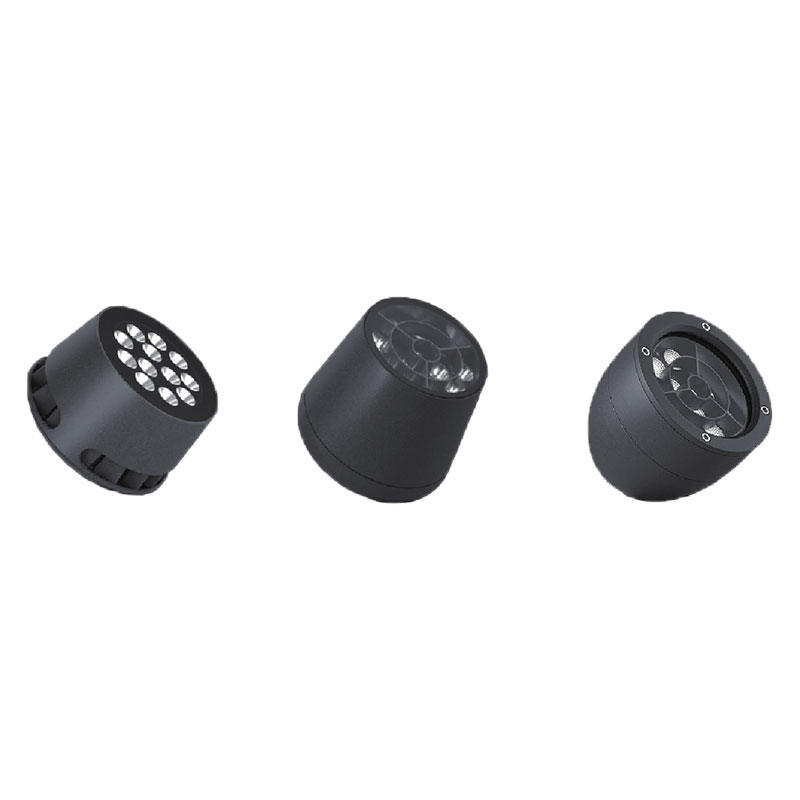 ESCH Aluminum Solar Light PoleThe Aluminum ESCH Solar Pole is a modern outdoor lighting system that integrates efficient photovoltaic power generation, intelligent energy storage, and LED lighting....View Product →
Battery state of charge across five days with two overcast days
The line tracks the state of charge at dawn each day, which is the moment a solar parking lot light is closest to failing. Monday and Tuesday start high because the array refills the battery during the day and the overnight load only draws it down to 72 to 78 percent. Wednesday and Thursday are overcast, so the array delivers a fraction of its rated output and the state of charge falls to 45 percent and then to 28 percent. The dashed line at 20 percent marks the low voltage cutoff that most controllers use to protect battery life, and staying above it is what decides whether the lights run all night. Friday recovers to 68 percent once the sun returns, which is why autonomy should be quoted in days rather than hours.
Choosing the Pole: Height, Material and Mounting
Mounting height sets the rest of the design. Light from a 15 foot pole covers a shorter throw but produces more glare per lumen, while a 30 foot pole covers more ground with fewer units and needs a heavier wall thickness.
| Application | Mounting height | Typical fixture | Mounting method |
|---|---|---|---|
| Perimeter and landscape parking | 10 to 15 ft | 40 W to 50 W | Planted, direct burial |
| Small retail and office lots | 15 to 20 ft | 60 W | Flanged base on concrete |
| Grocery, medical and mixed use | 20 to 25 ft | 70 W to 80 W | Flanged base, single or dual arm |
| Warehouse and truck courts | 25 to 40 ft | 80 W, dual head | Flanged base, heavy duty |
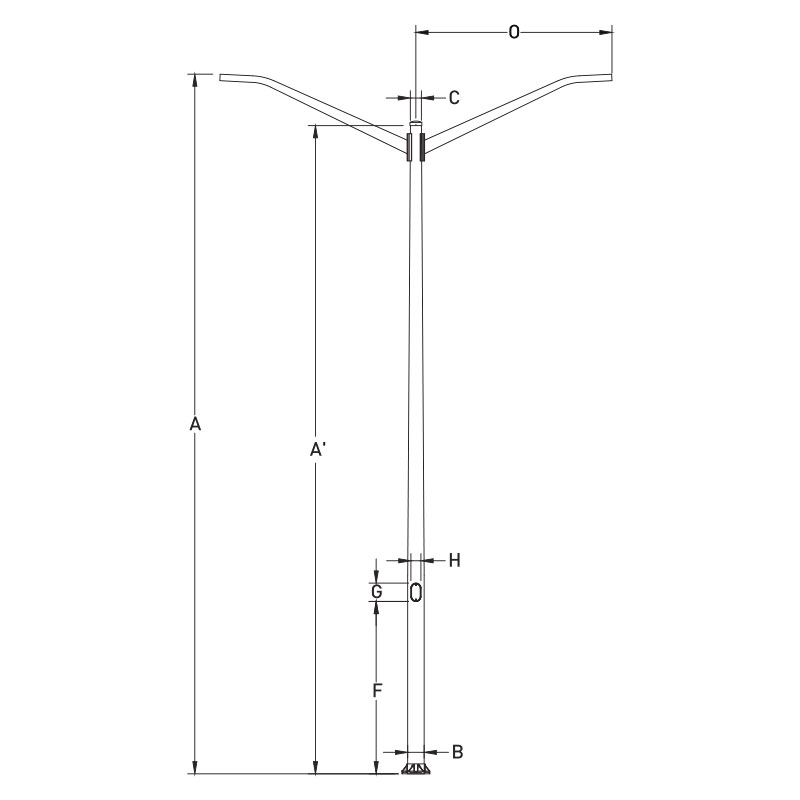 20ft-40ft Aluminum Conical Light Pole Duo Arms, Base Flange MountingConfirming to ASTM B221, the Pole shaft and arm will be made of extruded AL6063. The whole shaft will be full-length T6 heat-treated after the base flange is welded.View Product →
Aluminium or steel
Aluminium poles suit solar work because they are lighter to handle, naturally corrosion resistant and fully recyclable. Steel still wins for tall masts, long arms and heavy dual head assemblies. Morelux performs cutting, bending, spinning, welding, polishing, powder coating, anodizing and inspection inside its own plant, which matters when a project needs a specified finish and a repeatable wall thickness rather than a catalogue approximation.
Brackets and tenon adapters
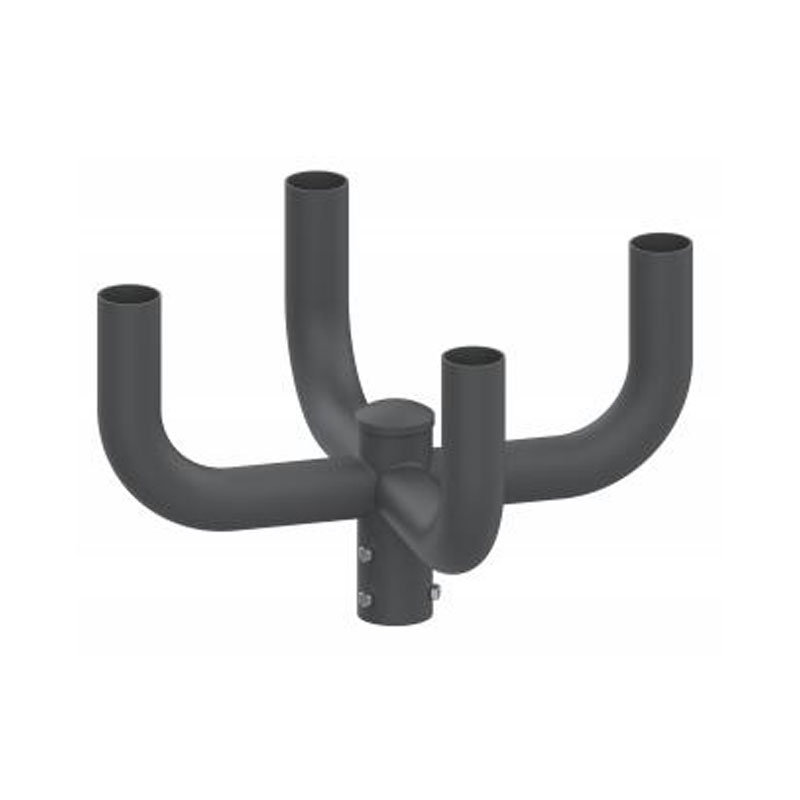
Hardware is where schedules slip. Tenon adapters come in 4 inch and 5 inch sizes, round or square, horizontal or vertical, and they let a new fixture sit on an existing pole without field welding. Wall mount brackets cover cases where the fixture attaches to a building instead of a pole. Measure the tenon outside diameter, the fixture slip fitter and the required arm reach before ordering, because a 5 inch adapter will not rescue a 4 inch tenon.
 5" Round Vertical External Light Pole Tenon AdapterFabricated from the highest grade structural steel and cast iron components on selected models.View Product →
Solar and Grid Tied Side by Side
The two options rarely differ much on paper. They differ on which risk the owner prefers to carry: weather risk with solar, and access risk with grid power.
Relative scores for a solar pole and a grid tied pole
The chart scores a solar pole and a grid tied pole against each other on five criteria that appear in almost every parking lot review. Grid tied wins on winter reliability and upfront cost advantage, because utility power does not care how many cloudy days arrive in a row. Solar leads on energy independence, low maintenance and carbon benefit, mainly because it removes the trench, the meter and the electrical inspection from the project. The overlap in the middle is where hybrid thinking helps, since one grid connected pole at the lot entrance can carry the entrance while the rest of the lot runs on solar. Treat the scores as relative rather than absolute, and rescore them for your own site before the design is frozen.
Where Solar Pays Back Fastest
The economics of solar parking lot lighting depend less on panel prices than on the cost that disappears with the trench.
Simple payback versus distance to grid power
Each column estimates simple payback in years for a twelve fixture lot as the distance to grid power grows. At a 50 foot run the solar premium is still visible and the return takes about nine years, which sits near the practical limit for most owners. At 100 feet payback drops to roughly seven years once conduit, asphalt repair and inspection are counted on the grid tied side. Beyond 200 feet the curve flattens near five years, and at 400 feet the solar option can return its cost in under four years. The pattern is the whole point: solar is not cheaper because panels are cheap, it is cheaper because the trench disappears.
Procurement Checklist Before You Order
- State the illuminance and uniformity target instead of a fixture wattage alone.
- Measure the distance to the nearest reliable power source and obtain a trenching quote.
- Record worst month sun hours and list every shading obstacle on the site plan.
- Confirm mounting height, tenon size, arm reach and base bolt pattern in writing.
- Ask for usable battery capacity in watt hours at the controller cutoff voltage.
- Agree the surface finish and confirm the coating or anodizing specification.
- Decide who cleans the panels and who replaces the battery in year eight.
Most disputes after installation trace back to items five and seven, because those are the numbers a catalogue sheet usually leaves out. Put them in the purchase order and the handover runs much more quietly.
Next Step
A solar parking lot design is only as good as the pole under it. Get the mounting height, wall thickness, tenon size and battery reserve right at the specification stage, and the rest of the project follows. If you are working through a layout now, send the lot dimensions and sun exposure details and the pole and solar assembly can be sized against the same drawing.